

UNDER 5s
Three hours, spread out
The NHS says toddlers and pre-schoolers should be active for at least 180 minutes a day, including outdoor play. Active play is the best way for this age to move.
Check an ageWHAT THE GUIDANCE SAYS
Play is how children get moving.
UK guidance asks for 3 hours of activity a day for toddlers and pre-schoolers and an average of an hour of moderate or vigorous activity for older children. Chasing, climbing, jumping and riding a bike all count, and safety regulators say a bit of challenge is part of the point.

MOVE MORE and let them climb
THE SHORT ANSWER
Two messages from UK health and safety bodies.
Children need lots of active play, and play should stretch them.
UNDER 5s
The NHS says toddlers and pre-schoolers should be active for at least 180 minutes a day, including outdoor play. Active play is the best way for this age to move.
Check an ageAGES 5 TO 18
Children and young people should aim for an average of at least 60 minutes of moderate or vigorous activity a day across the week, and break up long spells of sitting.
See the numbersHEALTHY RISK
The HSE says the goal in play is not to eliminate risk but to weigh up risks and benefits. Children learn about risk by meeting some.
Why risk helpsGeneral information only, not professional safety advice. If someone is in immediate danger, call the emergency services.
A QUICK AGE CHECK
Pick an age group to see what NHS guidance recommends each day. The bar shows how many minutes of activity the guidance asks for.
Based on NHS physical activity guidelines, which follow the UK Chief Medical Officers' guidelines. General information, not personal medical advice.
TWO NUMBERS WORTH KNOWING
From Sport England's Active Lives Children and Young People Survey,
2024-25 academic year, published December 2025.
49.1%
Children meeting the 60-minute guideline
Fewer than half of children and young people in England average 60 minutes or more of sport and physical activity a day. That is the highest level since the survey began in 2017-18, when it was 43%.
ACTIVE · ENGLAND 2024-25
28.4%
Under 30 minutes a day on average
More than a quarter of children are classed as less active, averaging under 30 minutes a day. A further 22.5% are fairly active, at 30 to 59 minutes.
LESS ACTIVE · ENGLAND 2024-25
Sport England reports active travel rising from 47% to 61% of children between 2017-18 and 2024-25. Girls (46%) remain a little less likely than boys (52%) to meet the guideline.
FOUR WAYS TO ADD PLAY
The NHS lists everyday activities that count, from playground games to walking to school. None needs a club or kit.
Walking to school or walking the dog are on the NHS list of activities that count for children.
The NHS lists playground activities such as jumping, running and catching among the moderate activities that count for children.
Guidance asks children to cut time spent sitting or lying and spread activity through the day. Under 5s should not be strapped in a buggy for long periods.
For toddlers, the NHS says active play such as climbing frames, bikes, water play and chasing games is the best way to get moving.

WHY A LITTLE RISK HELPS
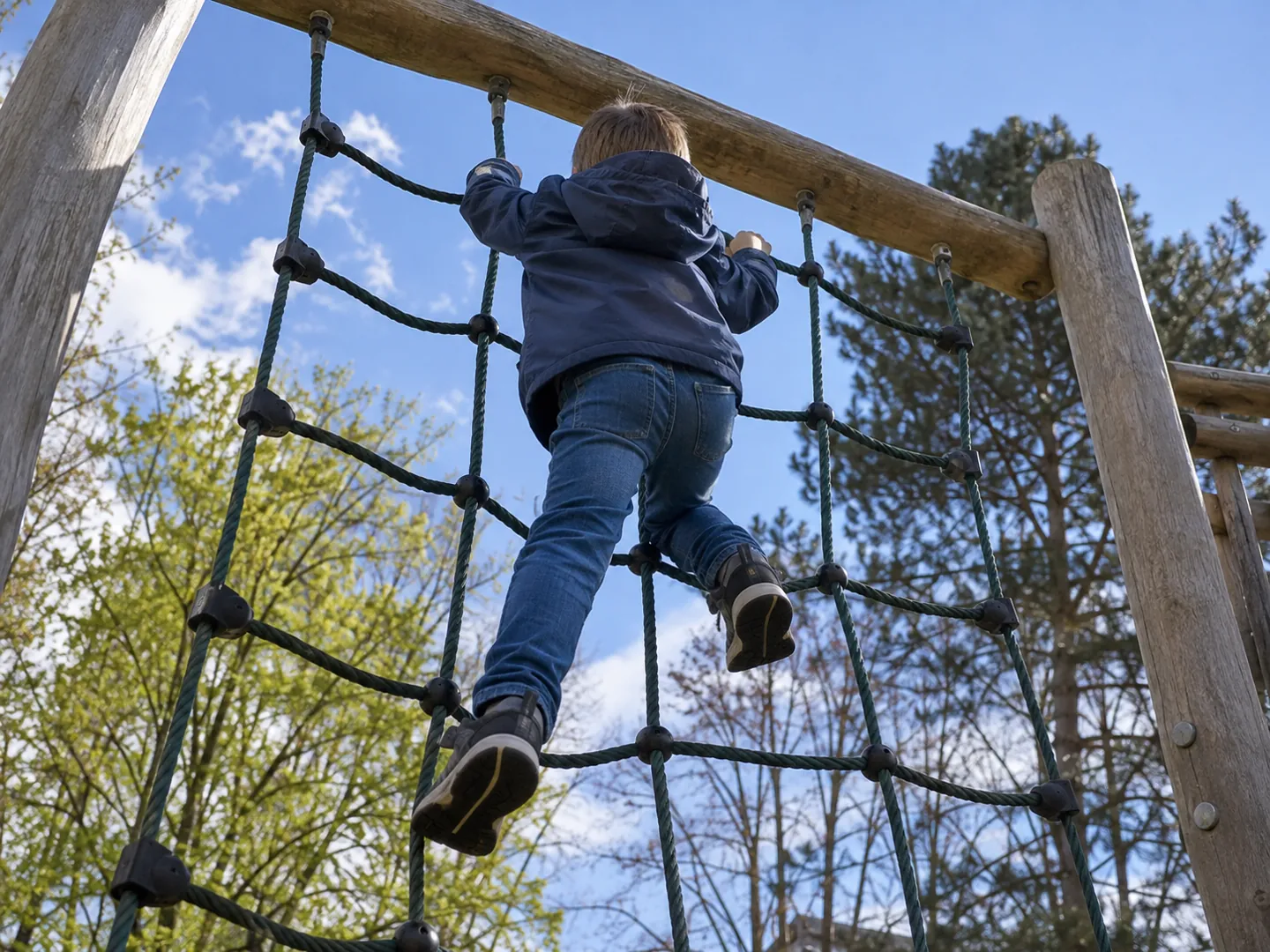
In 2012 the Health and Safety Executive and the Play Safety Forum issued a joint statement: play is great for children's well-being and development, and the goal when providing play is not to eliminate risk but to weigh risks against benefits.
The HSE says it does not want mistaken health and safety worries to create sterile play spaces that lack challenge. It says play providers should control the real risks, not trivial ones, and that serious accidents of any kind are very unlikely.
Questions
The NHS says toddlers aged 1 to 2 should be active for at least 180 minutes a day, spread through the day and including playing outdoors. Light activity counts as well as running and jumping.
Activity that raises the heart rate and makes them breathe faster and feel warmer. The NHS suggests a test: you can still talk, but not sing. Playground games, cycling and dancing all count.
No. The guideline for 5 to 18 year olds is an average of at least 60 minutes a day across the week, and the NHS suggests spreading activity throughout the day.
The HSE says play is a safe and beneficial activity and that the aim is to manage serious risks, not remove every risk. Sensible adult judgement is usually all that is needed.
Sport England's 2024-25 survey found 49.1% of children and young people in England meet the 60-minute guideline, the highest since the survey began, while 28.4% average under 30 minutes a day.
Sources
ABOUT THIS NAME
doodleplay.com is part of the DoodleSale portfolio. Check the current listing and available purchase or lease options.